You've spent years optimizing your website for Google. But have you actually optimized it for ChatGPT, Gemini, or Google's AI Overview?
Chances are, you haven't, and you're not alone. Most websites are still built for how people searched five years ago, not how they search now.
Here's a practical, no-fluff guide to fixing that, step by step.
Why This Is Worth Your Time Right Now
You're reading this because you already sense something has shifted. People aren't just typing keywords into Google anymore, they're asking full questions to AI tools and expecting a direct, trustworthy answer.
If your website isn't structured for these tools to understand and trust, you simply won't get mentioned, no matter how good your product or service actually is.
The businesses fixing this now are quietly building a lead that will be hard for competitors to catch up to later.
Step 1: Write Content That Answers Questions Directly
This is the single biggest shift you need to make. AI tools favor content that states the answer clearly and early, not content that builds up to it after three paragraphs of context.
If someone might ask "how much does X cost" or "how long does Y take," your content should answer that in the first sentence after the heading, then elaborate afterward.
This single change often does more for your AI visibility than any technical fix on this list.
Step 2: Structure Your Content With Clear Headings
AI tools and Google's AI Overview don't read your page top to bottom the way a human might. They scan for structure, pulling relevant sections based on clear, descriptive headings.
Use headings that mirror actual questions your customers ask, rather than vague, clever titles that don't tell the AI what the section actually covers.
Short paragraphs help here too. Dense blocks of text are harder for both AI systems and human readers to quickly extract value from.
Step 3: Add Proper Schema Markup
Schema is structured code that tells search engines and AI tools exactly what your content is, without forcing them to guess.
FAQ schema, Article schema, and LocalBusiness schema (if you're a local business) are strong starting points for most websites.
Google's own guide on structured data walks through exactly how to implement this correctly, straight from the source.
Step 4: Build Genuine Entity Consistency
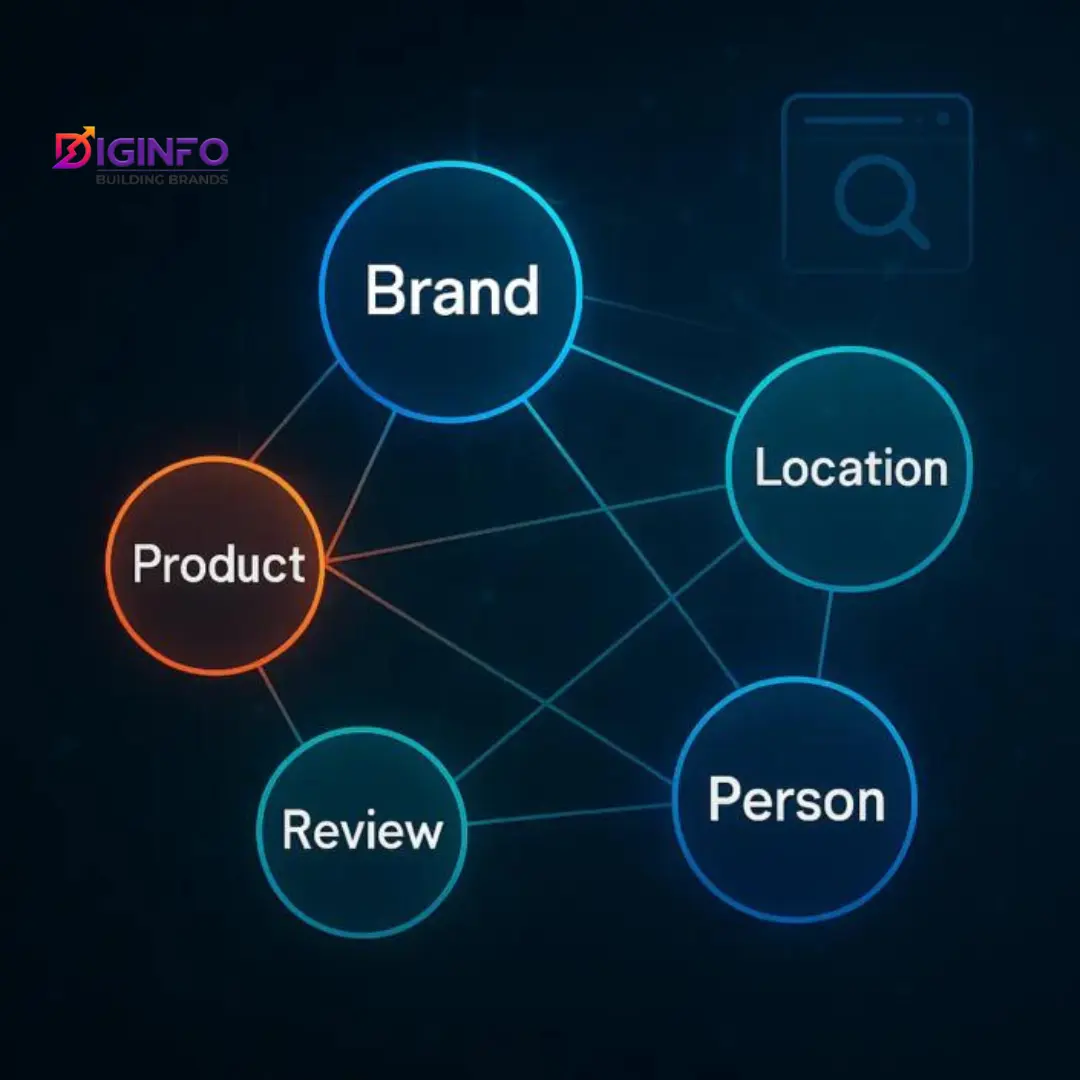
An entity is essentially a clearly defined "thing," like your brand, your founder, or your specific service, and AI tools rely heavily on recognizing these consistently across the web.
Make sure your business name, description, and key details read the same way across your website, social profiles, and any directories you're listed on.
Inconsistent entity information confuses AI systems and makes them less confident about recommending you, even if your website itself looks great.
Step 5: Earn Genuine Mentions Beyond Your Own Website
AI models don't just trust what you say about yourself, they weigh how often and how consistently other credible sources mention you too.
This means guest content, genuine press mentions, industry directories, and authentic customer reviews all play a real role in building AI trust over time.
A website with excellent on-page content but zero outside mentions still struggles to get recommended, because AI has nothing external to confirm your credibility.
Step 6: Keep Technical SEO Fundamentals Solid
None of this AI-focused work replaces the basics. Fast loading speed, mobile-friendliness, secure browsing, and clean site architecture still matter, both for Google's traditional ranking and as a baseline AI tools expect.
If your website is slow or difficult to navigate, it undermines the trust you're trying to build everywhere else.
Think of solid technical SEO as the foundation everything else in this list stands on.
Step 7: Check How AI Tools Currently See You
Before you assume any of this is working, actually test it. Ask ChatGPT and Google's AI Overview real questions about your industry and see if your brand shows up at all.
If it doesn't, that gap tells you exactly where to focus your effort next, rather than guessing.
Running this check every few months keeps you aware of how your visibility is actually progressing, not just how it feels like it's progressing.
Why SEO and AI Search Optimization Aren't Separate Jobs Anymore
You might be tempted to treat traditional SEO and AI optimization as two different projects, handled separately. That's not how it works anymore.
A well-structured, fast, trustworthy website ranks better on Google and gets cited more often by AI tools, because they're increasingly evaluating similar signals.
The businesses winning right now are the ones treating this as one connected strategy, not two competing priorities pulling in different directions.
The Bottom Line
Optimizing for ChatGPT, Gemini, and Google's AI Overview isn't a separate, futuristic project you can put off. It's becoming a core part of how any serious business needs to show up online today.
Start with direct, well-structured content, back it up with proper schema and consistent entity signals, and keep your technical SEO fundamentals solid throughout.
If you'd like an expert team to handle this for you, our AI Search Optimization service is built specifically for this, alongside our core SEO work.
Reach out to us at Diginfo, and let's get your website ready for however your customers choose to search next.